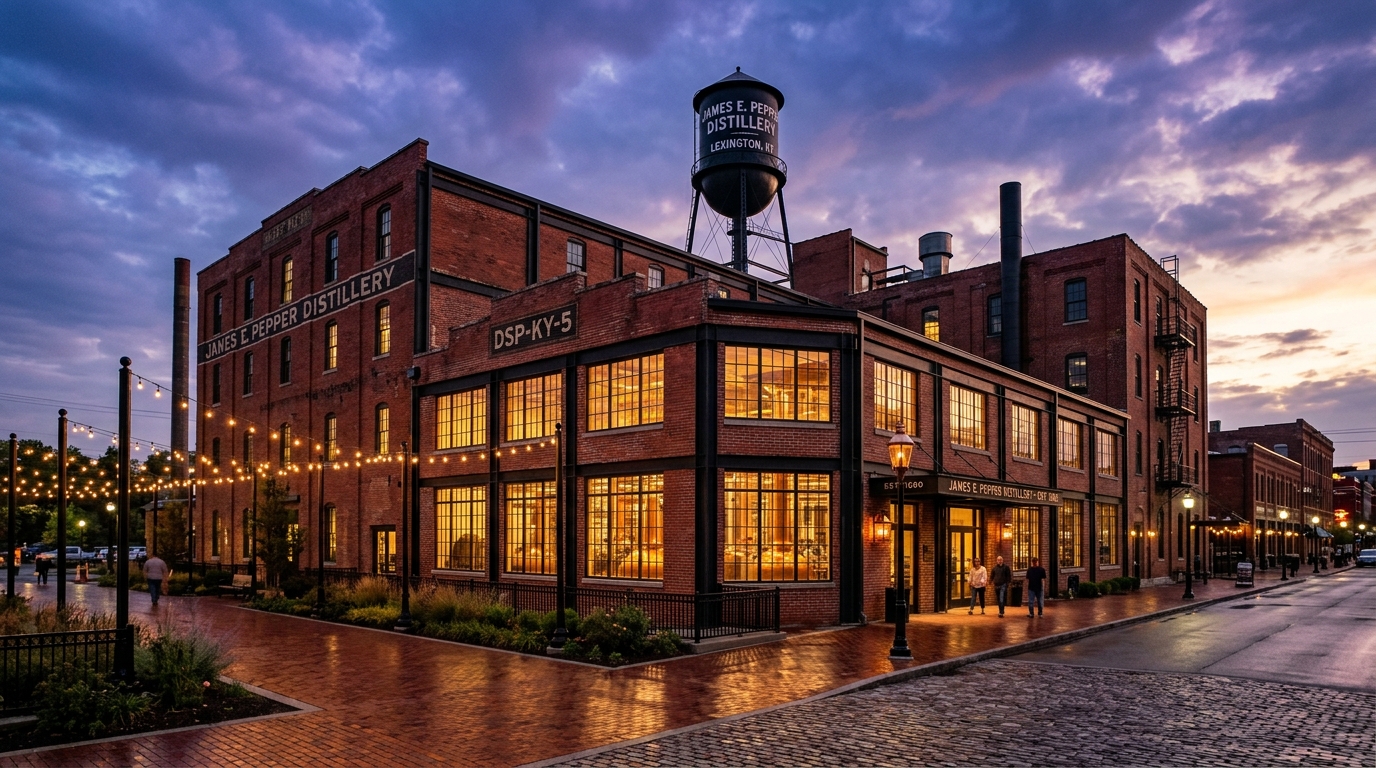
Operating under federal permit DSP-KY-5—the fifth registered distillery permit in the Commonwealth of Kentucky—the historic James E. Pepper Distillery on Manchester Street in Lexington is where industrial heritage, thoroughbred horse racing royalty, and world cocktail culture collide. Abandoned in 1958 and left in ruins for half a century, its 2017 revitalization catalyzed the rebirth of Lexington’s vibrant Distillery District.
1. The Pepper Distilling Dynasty: From the American Revolution to Manchester Street
The Pepper distilling heritage is older than the United States itself. In 1776—the dawn of the American Revolution—Elijah Pepper began distilling corn and rye whiskey in Culpeper County, Virginia, before migrating west into the Kentucky wilderness. In 1812, Elijah established his permanent distillery in Woodford County along Glenn’s Creek (the historic limestone site that later became Labrot & Graham and is today known as Woodford Reserve).
Three generations later, Elijah’s grandson, Colonel James E. Pepper, inherited the family distilling craft. In 1879, seeking expanded access to Lexington’s railroad network and the abundant, iron-free spring water of Town Branch creek, Colonel Pepper constructed what would become one of the largest and most technologically sophisticated distilleries in the United States on Manchester Street.
2. Colonel James E. Pepper: The Flamboyant Bourbon Aristocrat
Colonel James E. Pepper was not merely a distiller; he was one of the most charismatic, larger-than-life figures of the American Gilded Age. A thoroughbred breeder and turf enthusiast, Pepper campaigned champion racehorses across the country, capturing the 1891 Kentucky Derby with his horse Kingman.
Pepper traveled the continent in a private, mahogany-lined Pullman railcar named “Old Pepper,” entertaining presidents, European royalty, and financial titans. He was also a pioneer in brand marketing, trademarking the slogan “The Old Pepper Whisky: Born with the Republic” and affixing signature yellow strip stamps to his bottles to guarantee authenticity in an era rife with counterfeit, adulterated spirits. Alongside Colonel E.H. Taylor Jr., Pepper lobbied Congress relentlessly for the passage of the landmark Bottled-in-Bond Act of 1897.
3. The True Birth of the Old Fashioned Cocktail: From Louisville to the Waldorf-Astoria
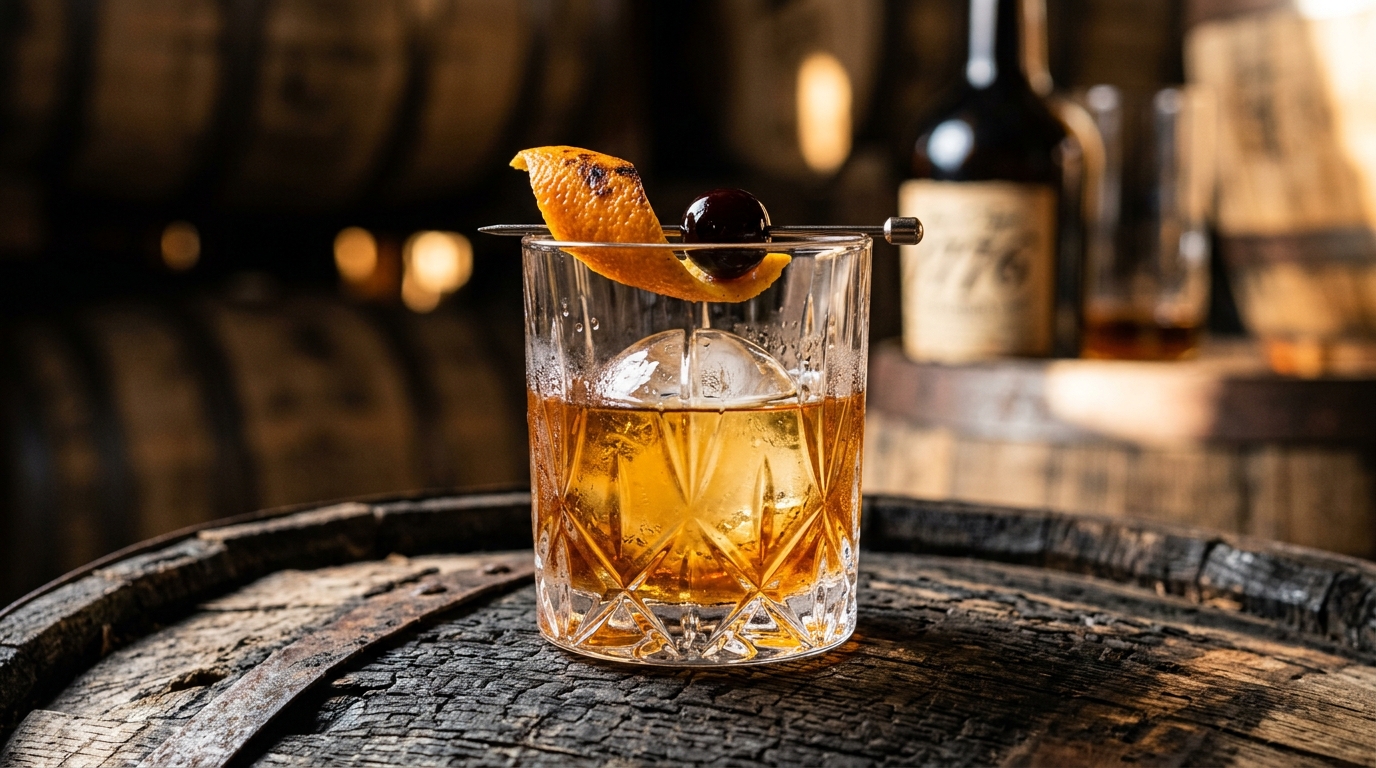
While cocktail history contains many myths, the historical documentation linking Colonel James E. Pepper to the global rise of the Old Fashioned is ironclad. In the 1880s, at the gentlemen’s Pendennis Club in Louisville, Kentucky, a bartender crafted a cocktail specifically to honor Colonel Pepper: muddling a sugar cube with Angostura bitters, adding a splash of water, a large block of ice, a generous pour of Colonel Pepper’s high-rye Kentucky whiskey, and expressing a fresh citrus peel over the rim.
Enamored with the libation, Colonel Pepper brought the precise recipe to the bartender at the world-renowned Waldorf-Astoria Hotel bar on Fifth Avenue in New York City. At the Waldorf, Pepper insisted that his Old Pepper Whiskey be poured in every drink. The cosmopolitan elite embraced the drink, New York newspapers covered it, and the “Old Fashioned” quickly became the benchmark classic cocktail of the English-speaking world.
4. What Does DSP-KY-5 Mean? Federal Permit History
When the federal government established the Distilled Spirits Plant (DSP) registry system under the Bureau of Internal Revenue to monitor tax collection and enforce production purity, permits were numbered sequentially. Colonel Pepper’s Lexington facility was awarded DSP-KY-5.
Having a single-digit permit number signifies foundational importance in American distilling history. Today, across thousands of active distilleries in the United States, DSP-KY-5 remains one of the rarest and most historically prestigious permit numbers still in active production. To understand how DSP numbers work across other Bluegrass producers, see our Federal Standards of Identity breakdown.
5. The 50-Year Abandonment & Amir Peay’s Historic Renaissance
The distillery weathered Prohibition by bottling medicinal whiskey, but in 1958, amid an industry-wide shift toward clear spirits, the Manchester Street facility closed its doors. For the next five decades, the complex sat abandoned. Ivy covered the crumbling red-brick rickhouses, copper pipes were looted, and the grounds were tagged with graffiti.
In 2008, whiskey entrepreneur and historian Amir Peay launched an obsessive quest to resurrect the James E. Pepper brand. Peay spent nearly a decade collecting original pre-Prohibition bottles, historical ledgers, advertising art, and Colonel Pepper’s original mashbills. In 2014, Peay partnered with local developers to rescue the crumbling Manchester Street stillhouse.
Following a multi-million-dollar restoration, the distillery reopened in December 2017. For the first time in 59 years, fresh bourbon and rye flowed from brand-new, custom-built copper pot and column stills crafted by Louisville’s renowned Vendome Copper & Brass Works, utilizing water drawn directly from the historic limestone well on site.
6. The 1776 Whiskey Expressions: Mashbills & Tasting Profiles
Today, the James E. Pepper Distillery crafts its flagship 1776 Whiskey line based on Colonel Pepper’s historic notes and modern craft distillation techniques:
1776 Kentucky Straight Bourbon (100 Proof)
High-Rye Mashbill: 60% Corn • 36% Rye • 4% Malted Barley
A bold, complex bourbon featuring vanilla bean, clover honey, toasted oak, and a sustained peppery rye spice finish. Non-chill filtered to preserve mouthfeel.
1776 Straight Rye Whiskey (100 Proof)
Heritage Rye Mashbill: 95% Rye • 5% Malted Barley
Award-winning, full-bodied rye bursting with dried orange peel, dark cocoa, fresh mint, cracked black pepper, and clove. The ideal base for a traditional Old Fashioned.
1776 Barrel Proof Bourbon & Rye (Uncut)
Cask Strength • 114–118 Proof Range
Drawn straight from single barrels without dilution. Rich, oily texture loaded with dark molasses, tobacco leaf, charred oak, and dark stone fruits.
7. Visitor & Tour Guide: How to Visit James E. Pepper Distillery
Unlike secluded rural distilleries that require long country drives, James E. Pepper is located right in downtown Lexington inside the pedestrian-friendly Distillery District on Manchester Street:
- Address: 1228 Manchester St, Suite 100, Lexington, KY 40504
- Stillhouse Tour & Tasting: 45–50 minutes ($20 per adult). Includes a guided walk through the active stillhouse, history museum with pre-Prohibition bottles, barrel room, and a guided flight of four 1776 whiskeys.
- Tasting Room & Patio: Open to walk-in visitors without a tour ticket. Enjoy craft Old Fashioneds, whiskey flights, and local beers on the Manchester Street patio.
- Reservations: Advance reservations are strongly recommended on weekends, particularly during Keeneland’s April and October race meets.
People Also Ask: James E. Pepper Distillery & Old Fashioned FAQs
Was the Old Fashioned cocktail invented at James E. Pepper Distillery?
The cocktail was created at the private Pendennis Club in Louisville by a bartender honoring Colonel James E. Pepper. Colonel Pepper then introduced the recipe to the bartender at the Waldorf-Astoria Hotel bar in New York City, which catapulted the drink to worldwide fame.
What does DSP-KY-5 mean on a whiskey bottle?
DSP stands for Distilled Spirits Plant. Number 5 indicates it was the fifth federal registered distillery permit issued in the Commonwealth of Kentucky, highlighting its historical standing among early American distillers.
Is James E. Pepper whiskey actively distilled in Lexington?
Yes! Following Amir Peay’s multi-year restoration, distillation resumed in December 2017. The whiskey is crafted on Manchester Street using copper pot and column stills by Vendome Copper & Brass Works and water from the site’s historic limestone well.
Do I need reservations to tour James E. Pepper Distillery?
Advance booking is highly recommended for guided stillhouse tours, as weekend slots frequently sell out. However, the cocktail bar, tasting flights, and outdoor patio welcome walk-in visitors during normal operating hours.
What other attractions are next to James E. Pepper on Manchester Street?
The Pepper campus anchors the Lexington Distillery District. Visitors can walk directly to wood-fired pizza at Goodfellas & Wiseguy Lounge, craft ice cream at Crank & Boom, craft beer at Ethereal Brewing, and live concerts at The Burl. Read our Distillery District Guide for a full venue map.
Central Kentucky Bourbon Authority Series
Pillar Knowledge Graph
Explore our comprehensive, interlinked knowledge series on Kentucky’s native spirit—from federal legal standards and karst limestone chemistry to Lexington’s historic Manchester Street stillhouses and regional trail itineraries:
Foundational Science
Bourbon vs. Whiskey: The Definitive Rules
Chemical terroir, mashbills, and the science of limestone karst water.
Federal Statute Pillar
The 6 Rules of Bourbon (27 CFR § 5.143)
The legal taxonomy, Bottled-in-Bond Act, and DSP permits.
James E. Pepper Distillery (DSP-KY-5)
1879 Manchester St history, the Old Fashioned, and copper still tours.
Lexington Distillery District
The Burl, Goodfellas Pizza, Crank & Boom, and craft nightlife.
Lexington Bourbon Trail Roadmap
Connecting urban craft stills to Woodford Reserve and Castle & Key.